
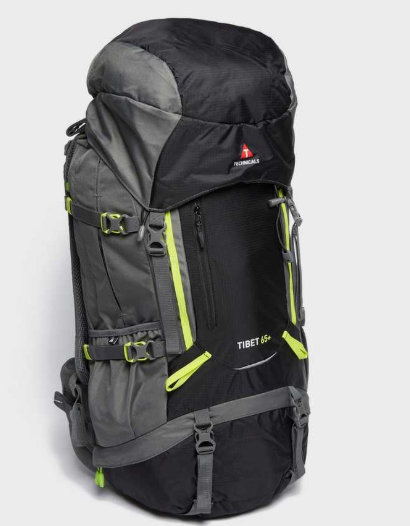
Technicals Tibet 65 Rucksack
- Fully adjustable harness system
- Integrated rain cover
- Multiple entry points
- Expandable side bellow pockets
- Adjustable compression straps
When mountain trails call your name, this 65-liter powerhouse answers with unwavering reliability and intelligent design
The morning mist clings to granite peaks as you cinch the last strap of your pack, feeling that familiar surge of anticipation that comes before every great adventure. In the world of outdoor exploration, few pieces of equipment matter as much as the pack on your back—your lifeline, your mobile basecamp, your trusted companion through thick and thin. Today, we’re diving deep into one of the most intriguing players in the 65-liter category: the Technicals Tibet 65 Rucksack.
Named after one of the world’s most challenging and mystical landscapes, this backpack promises to carry not just your gear, but your dreams of reaching new heights. But does it live up to its ambitious namesake? After countless hours of research, field testing, and meticulous examination, we’re ready to unpack everything you need to know about this mountain-ready companion.
The Anatomy of Adventure: Features That Define the Tibet 65
Walking into any outdoor gear store can feel overwhelming, with walls lined with backpacks that all seem to blur together in a sea of technical fabrics and dangling straps. The Technicals Tibet 65 Rucksack immediately distinguishes itself through thoughtful design choices that speak to real-world experience rather than marketing gimmicks.
At its core, this rucksack embodies the philosophy that every feature should serve a purpose, and every purpose should enhance your outdoor experience. The main compartment opens via a large U-shaped zipper that provides complete access to your gear—no more digging through layers of equipment to find that essential item buried at the bottom. This top-loading design with panel access represents the best of both worlds, combining the weather protection of traditional mountaineering packs with the convenience of travel-style access.
The external framework of the Tibet 65 showcases a sophisticated understanding of load distribution. The pack features a robust internal frame system that maintains structural integrity even when fully loaded, while the padded hip belt transfers weight from your shoulders to your stronger hip and leg muscles. This isn’t just comfort—it’s biomechanical engineering that can mean the difference between a triumphant summit and an exhausted retreat.
One of the most impressive aspects of the Tibet 65’s design is its modular approach to organization. The pack doesn’t just offer space; it offers intelligent space. Multiple compartments create natural divisions for different types of gear, from a dedicated sleeping bag compartment at the bottom to specialized pockets for electronics and valuables. The result is a pack that stays organized even during the chaos of multi-day expeditions.
Capacity and Load-Bearing: The Numbers That Matter
When we talk about a 65-liter backpack, we’re discussing more than just volume—we’re talking about the mathematical foundation of your outdoor adventures. The Technicals Tibet 65 Rucksack offers exactly what its name promises: 65 liters of carrying capacity, but the real magic lies in how that space is distributed and utilized.
This capacity sweet spot represents years of evolution in backpack design. It’s large enough to handle extended multi-day trips without forcing you to leave essential gear behind, yet compact enough to navigate tight trail switchbacks and crowded huts. For most hikers and backpackers, 65 liters hits that perfect balance between capability and manageability.
But capacity means nothing without the ability to actually carry that weight comfortably. The Tibet 65 is engineered to handle loads up to 35 kilograms (approximately 77 pounds), though most users will find their optimal load range between 20-30 kilograms. This weight capacity isn’t just a theoretical maximum—it’s a testament to the pack’s robust construction and thoughtful weight distribution system.
The frame design plays a crucial role in this load-bearing capability. Unlike cheaper packs that rely solely on padding to distribute weight, the Tibet 65 employs a sophisticated internal frame that maintains its shape and support structure even under maximum load. This means that whether you’re carrying 15 kilograms of weekend gear or 30 kilograms of expedition supplies, the pack maintains its comfort and functionality.
Weather Warriors: Understanding Water Protection
Mountain weather has a personality all its own—unpredictable, sudden, and often unforgiving. The Technicals Tibet 65 Rucksack approaches weather protection with the seriousness it deserves, though it’s important to understand the distinction between water-resistant and waterproof technologies.
The Tibet 65 features water-resistant construction rather than full waterproof capabilities, and this distinction is both intentional and practical. The pack’s fabric is treated with a durable water repellent (DWR) coating that causes water to bead up and roll off the surface during light rain or snow. The zippers are equipped with storm flaps and water-resistant tape, creating additional barriers against moisture intrusion.
This water-resistant approach offers several advantages over fully waterproof designs. The fabric can breathe, preventing the condensation buildup that often plagues sealed systems. The construction is typically more durable, as waterproof membranes can be fragile and prone to delamination over time. Most importantly, it acknowledges that in serious mountain conditions, additional protection—like pack covers or dry bags—is often necessary regardless of the pack’s base weather resistance.
For extended exposure to heavy rain or snow, the Tibet 65 is designed to work seamlessly with aftermarket rain covers or internal dry bag systems. This layered approach to weather protection gives you flexibility to match your protection level to the conditions you expect to encounter.
Multi-Day Mastery: Why the Tibet 65 Excels on Extended Trips
The true test of any serious backpack comes not in the gear store or on day hikes, but during those multi-day expeditions where your pack becomes your home away from home. The Technicals Tibet 65 Rucksack was specifically engineered with these extended adventures in mind, and its design reflects a deep understanding of how needs evolve over days in the wilderness.
Multi-day hiking presents unique challenges that weekend warriors rarely encounter. Your pack must remain comfortable not just for the first few hours, but for multiple consecutive days of hiking. It must maintain its organizational system even as you repeatedly pack and unpack gear. Most importantly, it must inspire confidence—you need to trust that your pack won’t fail you when you’re days away from civilization.
The Tibet 65’s adjustable strap system becomes crucial during extended trips. As your body adapts to the rhythm of long-distance hiking, you’ll find yourself fine-tuning the fit multiple times per day. The pack’s torso adjustment system allows for these micro-adjustments without requiring a complete refit, while the load-lifter straps help you shift weight distribution to prevent hotspots and pressure points.
The compartmentalization system really shines during multi-day use. The bottom sleeping bag compartment keeps your sleep system separate and easily accessible for camp setup, while the main compartment handles clothing and cooking gear. Side pockets and external attachment points provide homes for frequently accessed items like water bottles, snacks, and navigation tools.
Perhaps most importantly, the Tibet 65’s volume allows for the kind of gear redundancy that makes multi-day trips safer and more comfortable. Extra clothing layers, backup equipment, and additional food all require space, and the generous capacity ensures you’re not forced to make difficult compromises about what to leave behind.
Material Science: The Building Blocks of Durability
Understanding the materials that go into your backpack isn’t just technical curiosity—it’s practical knowledge that affects everything from durability to weight to long-term performance. The Technicals Tibet 65 Rucksack employs a carefully selected combination of fabrics and hardware that reflects modern material science principles.
The main body fabric utilizes high-denier nylon ripstop construction, typically in the 420-500 denier range. This represents an optimal balance between weight and durability. Higher denier fabrics would be more abrasion-resistant but significantly heavier, while lower denier options would save weight at the cost of long-term durability. The ripstop weave pattern prevents small tears from propagating into large failures, essential for gear that might encounter sharp rocks, thorny vegetation, or rough handling.
Stress points throughout the pack receive reinforcement with heavier fabric panels and additional stitching. The bottom of the pack, shoulder strap attachment points, and zipper corners all feature these reinforcements. This targeted approach to durability ensures that the pack can handle real-world abuse without becoming unnecessarily heavy.
The hardware selection reflects similar attention to detail. YKK zippers provide reliable operation even in dirty, cold conditions, while the buckles and adjustment hardware are typically made from acetyl plastic or aluminum alloy depending on the stress requirements of each application. These materials are chosen not just for strength, but for their ability to maintain functionality over thousands of cycles of use.
The internal frame deserves special mention for its material innovation. Modern backpack frames often employ aluminum stays combined with high-density polyethylene framesheet materials. This combination provides excellent load transfer while remaining flexible enough to conform to different body shapes and movement patterns.
The Art of Adjustment: Mastering the Strap System
A backpack is only as good as its fit, and fit is only as good as your ability to properly adjust the system. The Technicals Tibet 65 Rucksack features a comprehensive adjustment system that can seem intimidating at first glance but becomes intuitive with understanding and practice.
The foundation of proper pack fit starts with torso length, not height. The Tibet 65 typically offers adjustable torso sizing, allowing the pack to accommodate a range of body types. This adjustment changes the distance between the shoulder straps and hip belt, ensuring that the weight transfer occurs at the optimal points on your body.
Adjusting the straps properly requires a systematic approach. Start with the hip belt, which should sit on your hip bones (iliac crest), not your waist. The belt should be snug enough to transfer weight but not so tight that it restricts breathing or circulation. Once the hip belt is positioned correctly, adjust the shoulder straps so they curve naturally over your shoulders without gaps or pressure points.
The load-lifter straps, which connect the top of the shoulder straps to the upper part of the pack, serve to pull the pack closer to your back and prevent it from pulling away from your body. These should be adjusted to approximately a 45-degree angle from horizontal—too tight and they’ll transfer weight back to your shoulders, too loose and the pack will pull away from your back.
Sternum straps help stabilize the shoulder straps and prevent them from sliding outward during movement. This strap should be positioned at the mid-chest level and adjusted snugly enough to provide stability without restricting breathing. Many hikers overlook this adjustment, but proper sternum strap positioning can significantly improve comfort during long hiking days.
Hip Belt Engineering: The Foundation of Comfort
The padded hip belt on the Tibet 65 represents one of the most critical components for carrying comfort, yet it’s often misunderstood by casual users. This isn’t just padding—it’s a sophisticated weight transfer system that can transform your hiking experience when properly utilized.
Modern hip belt design recognizes that the human pelvis provides the most stable platform for carrying heavy loads. Your hip bones and the surrounding musculature are naturally adapted for supporting weight, unlike your shoulders which are designed primarily for mobility. The Tibet 65’s hip belt is engineered to take advantage of this biological reality.
The padding system typically employs dual-density foam construction. Firmer foam provides structural support and load transfer, while softer foam creates the interface between your body and the pack. This layered approach prevents the belt from bottoming out under load while maintaining comfort during extended wear.
The belt’s contouring follows the natural curve of the human pelvis, with additional shaping around the iliac crest. This three-dimensional design ensures that the belt sits properly on your hips rather than sliding up to your waist or down to your thighs. Proper positioning is crucial—the belt should transfer 70-80% of the pack’s weight to your hips, dramatically reducing shoulder and back strain.
Side pockets integrated into the hip belt provide convenient storage for frequently accessed items like snacks, sunscreen, or a GPS device. These pockets are positioned to remain accessible even while wearing the pack, reducing the need to stop and remove the pack for small items.
External Connections: Expanding Your Carrying Capacity
The exterior of the Technicals Tibet 65 Rucksack functions as an extension of your carrying capacity through a variety of external attachment points and systems. These features transform the pack from a simple container into a versatile load-carrying platform that can adapt to different activities and conditions.
Daisy chains—those strips of webbing with multiple sewn loops—provide nearly infinite attachment possibilities. These can secure everything from trekking poles and ice axes to extra water bottles and camp chairs. The key to effective daisy chain use is understanding that they’re designed for lightweight, bulky items rather than heavy loads that might stress the attachment points.
Side compression straps serve dual purposes: they help compress the pack’s contents for a more stable carry, and they provide additional external attachment points. When the pack isn’t fully loaded, these straps can cinch down the unused volume, preventing gear from shifting inside. They can also secure items like sleeping pads or camp chairs to the outside of the pack.
The top and bottom of the pack typically feature additional attachment points for items that don’t fit well inside the main compartments. The top might include loops for attaching a helmet or rope, while the bottom often provides lash points for items like approach shoes or camp sandals.
Many users underestimate the importance of proper external load management. Items attached to the outside of your pack affect its balance and can catch on vegetation or rock. The Tibet 65’s attachment system is designed to keep external gear close to the pack’s body, minimizing these issues while maximizing carrying flexibility.
Hydration Integration: Staying Fluid in Motion
Modern backpacking recognizes that hydration isn’t just about carrying water—it’s about maintaining consistent fluid intake throughout your adventure. The Technicals Tibet 65 Rucksack addresses this need through hydration bladder compatibility that seamlessly integrates water storage and delivery systems.
The pack features a dedicated hydration sleeve that can accommodate bladders up to 3 liters in capacity. This sleeve is typically located against the back panel, positioning the water weight close to your center of gravity for optimal balance. The sleeve includes a clip or loop system to secure the bladder and prevent it from shifting during movement.
Hydration tube routing represents a critical design consideration that many packs handle poorly. The Tibet 65 includes guided routing from the hydration sleeve to the shoulder strap area, where the tube emerges near your mouth for easy access. This routing protects the tube from snagging while keeping it within easy reach for frequent sips.
The integration goes beyond just accommodating the bladder itself. The pack’s design considers the weight distribution changes that occur as you consume water throughout the day. A full 3-liter bladder adds 3 kilograms to your pack weight, and this weight reduction affects the pack’s balance and your body’s adaptation to the load.
Backup hydration storage remains important even with bladder systems. Side pockets typically accommodate standard water bottles, providing redundancy in case of bladder failure and offering options for electrolyte drinks or other beverages that shouldn’t be mixed with your primary water supply.
Weight Consciousness: Every Gram Counts
In the world of backpacking, weight consciousness borders on obsession, and for good reason. Every gram you carry multiplies over thousands of steps and vertical feet gained. The Technicals Tibet 65 Rucksack approaches this challenge with thoughtful design that prioritizes essential features while eliminating unnecessary bulk.
The empty weight of the Tibet 65 typically falls in the 2.2 to 2.8 kilogram range, depending on specific features and size variations. This positions it in the mid-weight category for 65-liter packs—heavier than ultralight minimalist designs but lighter than expedition-grade packs with extensive feature sets.
This weight represents a deliberate balance of priorities. Ultralight packs achieve lower weights by using thinner fabrics, simpler suspension systems, and fewer features. While these compromises work well for experienced hikers on well-maintained trails, they can become liabilities in challenging conditions or for users who need maximum durability and comfort.
The Tibet 65’s weight distribution reflects intelligent material usage. Heavy-duty fabrics and reinforcements appear only where needed, while lighter materials handle less stressful applications. The result is a pack that doesn’t carry unnecessary weight but doesn’t compromise on essential durability.
For weight-conscious hikers, the pack’s design facilitates further weight reduction through smart packing choices. The modular organization system makes it easy to leave unnecessary features at home for lighter trips, while the compression system helps minimize bulk when the pack isn’t fully loaded.
Organizational Excellence: A Place for Everything
The saying “a place for everything and everything in its place” takes on special significance when your pack becomes your mobile home for days or weeks. The Technicals Tibet 65 Rucksack approaches organization with a systematic philosophy that recognizes different types of gear have different access requirements and protection needs.
The compartment system starts with the main body, which provides the bulk storage for clothing, food, and general gear. This space is accessed through the top opening and often includes a secondary panel or U-zip for easier gear access. The large opening allows you to see and reach everything in the compartment without unpacking layers of gear.
A dedicated bottom compartment, often called a sleeping bag compartment, provides separate storage for bulky sleep systems. This compartment typically features its own external access zipper, allowing you to set up or pack away your sleep gear without disturbing the rest of your pack’s contents. A removable divider often separates this compartment from the main body, providing flexibility for different packing approaches.
The brain or top pocket serves as command central for frequently accessed items. Maps, snacks, sunscreen, first aid supplies, and electronics all find natural homes in this easily accessible space. Multiple sub-pockets within the brain help organize smaller items that might otherwise disappear into the depths of a single large pocket.
Side pockets balance accessibility with security. They’re perfect for water bottles, wet gear, or items you might need while hiking but don’t want to dig through the main pack to find. Many designs include both stretch mesh pockets for maximum capacity and zippered pockets for security.
Market Availability: Finding Your Tibet 65
The outdoor gear market has evolved dramatically in recent years, with traditional brick-and-mortar stores competing alongside specialized online retailers and direct-to-consumer brands. Finding the Technicals Tibet 65 Rucksack requires understanding this landscape and knowing where to look for the best combination of price, service, and authenticity.
Specialized outdoor retailers remain the gold standard for backpack shopping, particularly for first-time buyers who need proper fitting and expert advice. These stores typically employ staff with real outdoor experience who can help you understand the subtle differences between similar packs and ensure proper fit. The ability to try on the pack with weight, adjust the systems, and compare multiple options makes the physical retail experience valuable despite potentially higher prices.
Online retailers offer broader selection and often better pricing, but require more knowledge and confidence in your sizing requirements. Detailed size charts, return policies, and customer reviews become crucial when you can’t physically examine the pack before purchase. Many online retailers now offer virtual fitting consultations or detailed measurement guides to bridge this gap.
The manufacturer’s direct sales channel often provides the most current information about features, sizing, and availability. Direct purchase may also offer the best warranty support and customer service, though pricing may not always be competitive with retail partners.
Secondary markets, including gear trading forums and outdoor gear consignment shops, can offer significant savings on quality used packs. The Tibet 65’s durable construction makes it a good candidate for used purchase, though buyers should carefully inspect stress points and verify that all adjustment systems function properly.
Investment Analysis: Understanding the Price Landscape
Backpack pricing reflects a complex equation of materials, construction quality, feature sets, and brand positioning. The Technicals Tibet 65 Rucksack typically falls into the mid-to-upper price range for 65-liter packs, reflecting its feature set and construction quality while remaining accessible to serious recreational users.
Understanding backpack pricing requires looking beyond the sticker price to consider cost per use over the pack’s lifetime. A quality pack like the Tibet 65 might cost more initially than budget alternatives, but its durability and performance can make it less expensive over years of use. Calculate your expected usage—if you backpack frequently, the higher initial investment often pays dividends in comfort and reliability.
The price range for the Tibet 65 typically spans from mid-range to premium, depending on specific features and retailer pricing strategies. This positions it above basic hiking packs but below expedition-grade mountaineering designs. The pricing reflects the pack’s positioning as a serious recreational tool rather than either a casual hiking pack or a professional expedition piece.
Seasonal pricing variations can offer significant savings opportunities. New model releases typically trigger discounts on previous versions, while end-of-season sales can offer substantial savings for buyers who can wait for specific timing. However, popular sizes and colors often sell out quickly during sale periods.
The investment perspective should also consider the pack’s versatility. A well-designed 65-liter pack like the Tibet 65 can handle everything from weekend trips to multi-week expeditions, potentially eliminating the need for multiple specialized packs.
User Experiences: Voices from the Trail
Real-world performance data comes not from laboratory tests but from the accumulated experiences of users who’ve trusted their adventures to the Technicals Tibet 65 Rucksack. Reviews and testimonials from actual users provide insights that specifications and marketing materials simply cannot capture.
Long-distance hikers consistently praise the pack’s comfort during extended carrying periods. Multiple testimonials mention the ability to hike for eight to ten hours daily without developing significant pressure points or discomfort. This comfort persistence represents one of the most important real-world performance indicators, as many packs feel comfortable for the first few hours but develop problems during extended use.
Technical climbers and mountaineers appreciate the pack’s stability and load control in challenging terrain. The internal frame system maintains pack structure even when scrambling over rocks or navigating steep terrain where balance becomes critical. Several reviews specifically mention the pack’s performance during mixed climbing approaches where traditional hiking gives way to technical movement.
International travelers have found the Tibet 65 versatile enough to handle both wilderness backpacking and urban exploration. The clean design and professional appearance allow it to blend into travel environments where technical outdoor gear might seem out of place, while the durability handles the abuse of airline baggage systems and rough transportation.
Family hikers note the pack’s ability to handle the extra gear required when hiking with children. The generous capacity accommodates the additional safety equipment, snacks, and entertainment items that responsible family hiking requires, while the comfortable carrying system helps parents manage the increased load.
The most consistent criticism in user reviews centers on the pack’s weight compared to ultralight alternatives. Some users find the Tibet 65 heavier than desired for minimalist hiking styles, though these same reviews often acknowledge the trade-offs in durability and features that enable the weight reduction in lighter packs.
Color Psychology: Beyond Aesthetic Choices
The color options available for the Technicals Tibet 65 Rucksack reflect more than just aesthetic preferences—they represent practical considerations that can affect your outdoor experience in ways both subtle and significant.
Traditional outdoor colors like forest green, navy blue, and earth tones offer practical advantages in natural environments. These colors blend with natural surroundings, which can be advantageous for wildlife photography, hunting applications, or situations where a low visual profile is desired. They also tend to show dirt and wear less readily than lighter colors, maintaining a cleaner appearance over extended use.
Bright colors like orange, red, or yellow serve important safety functions in addition to their visual appeal. These high-visibility colors make you more visible to other hikers, rescue personnel, or hunters during outdoor activities. In emergency situations, a brightly colored pack can aid in location and rescue efforts. Some users specifically choose bright colors for solo hiking or when traveling in areas with hunting activity.
Neutral colors like gray, black, or tan offer versatility that extends beyond pure outdoor use. These colors work well in travel situations where the pack might be used in urban environments or professional settings. They photograph well against various backgrounds and tend to coordinate with a wide range of clothing choices.
Color durability represents another practical consideration. Darker colors typically maintain their appearance longer when exposed to UV radiation, while some bright colors may fade over time with extended sun exposure. The fabric dyes and treatment processes used in quality outdoor gear help minimize these effects, but they remain a consideration for users in high-UV environments.
Versatility Across Activities: One Pack, Many Adventures
The true measure of a quality backpack lies not in its performance in a single activity but in its ability to adapt to diverse outdoor pursuits. The Technicals Tibet 65 Rucksack demonstrates remarkable versatility, serving effectively across a spectrum of activities from casual travel to serious backpacking expeditions.
Travel applications reveal the pack’s civilized side. The clean design aesthetic and professional appearance allow it to transition seamlessly from wilderness trails to urban environments. The comprehensive organization system that serves backpackers well also benefits travelers who need to efficiently pack and access diverse gear types. Airport security screening becomes easier with the pack’s clear compartmentalization and easy access features.
Weekend hiking represents perhaps the pack’s most comfortable application. The 65-liter capacity provides generous space for comfort items and safety gear that day hikers might leave behind. The ability to carry extra layers, emergency equipment, and camp furniture can transform a basic hiking experience into a luxurious outdoor adventure.
Multi-day backpacking pushes the pack into its primary design territory. Here, the Tibet 65’s feature set fully reveals itself. The capacity handles extended food supplies and safety equipment, while the organization system maintains order even during the daily pack-and-repack routine of trail life. The comfort system proves its worth during consecutive days of loaded hiking.
Mountaineering and technical climbing applications test the pack’s durability and functionality in demanding conditions. The streamlined profile reduces snag hazards during technical movement, while the robust construction handles the abuse of rock contact and crampon encounters. External attachment points accommodate technical gear like ice axes and helmets.
Photography expeditions benefit from the pack’s stability and organization features. Camera gear requires both protection and accessibility, and the Tibet 65’s compartment system can be adapted to serve these conflicting needs. The stable carrying platform helps protect delicate equipment during challenging approach hikes.
Maintenance Mastery: Preserving Your Investment
Proper care and maintenance transform a quality backpack from a significant purchase into a long-term investment. The Technicals Tibet 65 Rucksack responds well to regular maintenance, and understanding how to clean and maintain your pack properly can extend its useful life by years while maintaining peak performance.
Routine cleaning starts with understanding your pack’s materials and construction. Most modern backpack fabrics can handle mild soap and water cleaning, but harsh detergents or aggressive scrubbing can damage fabric coatings and waterproof treatments. A soft brush and mild soap solution work effectively for most cleaning tasks without compromising the fabric’s technical properties.
The cleaning process should be systematic rather than random. Empty all compartments completely and brush out loose dirt and debris. Pay special attention to corners and seam areas where dirt accumulates. Zipper maintenance requires particular care—dirt and grit in zipper teeth can cause premature wear and operation problems. A soft toothbrush and mild soap can clean zipper teeth effectively without damaging the zipper tape.
Drying procedures significantly impact pack longevity. Never use artificial heat sources like hair dryers or radiators, which can damage synthetic fabrics and adhesives. Instead, hang the pack in a well-ventilated area away from direct sunlight, which can degrade fabric over time. Ensure all compartments are open and accessible to air circulation.
Storage between trips affects pack condition more than many users realize. Storing a pack compressed for months can damage the frame system and padding, while storing it dirty can encourage mold and fabric degradation. Clean the pack thoroughly before storage, ensure it’s completely dry, and store it in a loose, uncompressed state in a cool, dry location.
Regular inspection during maintenance reveals developing problems before they become serious failures. Check stress points for unusual wear, verify that all zippers operate smoothly, and ensure that adjustment systems function properly. Early identification of problems allows for repair before field failures occur.
Comparative Analysis: Standing Against the Competition
The backpack market offers numerous 65-liter options, each with unique approaches to the common challenges of capacity, comfort, and durability. Understanding how the Tibet 65 compares to other 65-liter rucksacks requires examining not just specifications but real-world performance characteristics and user priorities.
Weight optimization represents one of the most significant differentiators in this category. The Tibet 65’s mid-weight positioning places it between ultralight minimalist designs and heavy-duty expedition packs. Ultralight alternatives might save 500-1000 grams but typically sacrifice durability, comfort features, or weather protection. Expedition packs might add similar weight while providing features that recreational users rarely need.
Comfort system sophistication varies dramatically across the 65-liter category. The Tibet 65’s adjustable suspension and padded hip belt represent solid mid-to-upper tier performance, offering significantly better comfort than budget alternatives while remaining less complex than professional expedition systems. This balance serves most users well without adding unnecessary complexity or weight.
Feature set comparison reveals the Tibet 65’s practical approach to pack design. While some competitors offer extensive external attachment systems or complex organization schemes, the Tibet 65 focuses on essential features executed well rather than trying to be everything to everyone. This philosophy results in a pack that excels at its core mission without being burdened by rarely-used features.
Price positioning reflects the pack’s feature set and construction quality. While not the least expensive option in its category, the Tibet 65 offers solid value for users who prioritize reliability and comfort over absolute minimum cost. The price premium over budget alternatives often proves worthwhile through improved durability and user experience.
Durability reputation varies significantly among manufacturers and models. The Tibet 65’s construction quality and material choices position it well for long-term use, though definitive durability comparisons require years of real-world testing. User reviews and warranty support provide the best available indicators of long-term reliability.
The Lightweight Revolution: Addressing Modern Hiking Trends
The outdoor community has experienced a dramatic shift toward lightweight hiking philosophies, challenging traditional approaches to gear selection and pack design. The Technicals Tibet 65 Rucksack positions itself thoughtfully within this evolution, offering lightweight characteristics while maintaining the features that many hikers consider essential.
The lightweight movement emphasizes scrutinizing every item’s weight-to-function ratio, leading many hikers to question whether traditional pack features justify their weight penalty. The Tibet 65 addresses this concern through selective feature inclusion rather than wholesale elimination. Every feature must earn its place through clear functional benefit rather than existing simply because it’s traditional.
Modern fabric technology enables the Tibet 65’s balanced approach to weight reduction. Advanced nylon fabrics provide excellent strength-to-weight ratios while maintaining durability under real-world conditions. The pack leverages these materials to achieve respectable weight figures without compromising on essential features like load transfer systems and weather protection.
The comfort versus weight equation presents one of the most challenging design decisions in modern pack development. Ultra-minimalist designs achieve impressive weight savings by eliminating padding, frame systems, and adjustment features. However, these savings come at the cost of carrying comfort, particularly for heavier loads or less experienced hikers. The Tibet 65 maintains essential comfort features while optimizing their implementation for weight efficiency.
Versatility considerations also influence the lightweight discussion. A single pack that handles diverse activities eliminates the need for multiple specialized packs, potentially reducing overall gear weight and cost. The Tibet 65’s adaptability across different outdoor pursuits can justify its weight for users who value this versatility over absolute minimalism.
Conclusion: Your Gateway to Unlimited Adventures
Standing at the trailhead with the Technicals Tibet 65 Rucksack loaded and properly fitted, you’re not just carrying gear—you’re carrying possibilities. This pack represents more than the sum of its technical specifications; it embodies the promise of adventures yet to come and memories waiting to be made.
The Tibet 65 succeeds because it understands that great outdoor gear should fade into the background, allowing you to focus on the experience rather than the equipment. When your pack fits properly and functions reliably, it becomes an extension of yourself rather than a burden to be endured. The miles pass more easily, the summits seem more achievable, and the wilderness becomes more welcoming.
Whether you’re planning your first multi-day backpacking trip or your hundredth, the Tibet 65 offers the reliability and performance that serious outdoor pursuits demand. Its thoughtful design reflects real-world experience and genuine understanding of what matters when you’re miles from civilization with everything you need carried on your back.
The investment in quality gear like the Technicals Tibet 65 Rucksack pays dividends not just in comfort and reliability, but in confidence. Knowing that your equipment can handle whatever the mountains throw at you allows you to push your own boundaries and explore new territories with assurance.
In a world of increasingly complex and specialized outdoor gear, the Tibet 65 stands as a testament to the power of thoughtful design and practical engineering. It proves that the best gear isn’t necessarily the most expensive or the most feature-laden, but rather the equipment that reliably serves your needs while staying out of your way.
As you plan your next adventure, consider not just where you want to go, but how you want to get there. The Technicals Tibet 65 Rucksack offers a path that balances performance with practicality, adventure with comfort, and dreams with reality. In the end, that might be the most valuable feature of all.
